
Top 5 Line Array Mistakes We See
Top 5 Line Array Mistakes We See
Table of Contents
Introduction
Line array systems are capable of delivering exceptional coverage, clarity and consistency, but only when they’re designed and deployed correctly. Many of the performance issues we encounter aren’t caused by the loudspeakers themselves, but by a handful of common setup mistakes. Here are five of the most frequent line array errors we see, along with simple ways to avoid them.
1. Thinking Every Venue Needs Flown Subwoofers
One of the biggest misconceptions is that every line array requires flown subwoofers. In reality, subwoofer placement depends on the venue, available rigging height and the performance goals.
If trim height is limited, ground-stacking the subwoofers is often the better solution. This allows the main array to be flown at the correct height for audience coverage while keeping low-frequency performance strong and consistent. Trying to squeeze flown subwoofers into a venue with limited height can actually reduce the effectiveness of the main array by forcing it lower than ideal.
There is no universal rule that says subwoofers must always fly with the array. Many successful touring and installation systems use ground-stacked subs because they provide excellent performance, faster deployment and simpler logistics.
The objective is not to copy another system, but to achieve the best acoustic result for the venue.
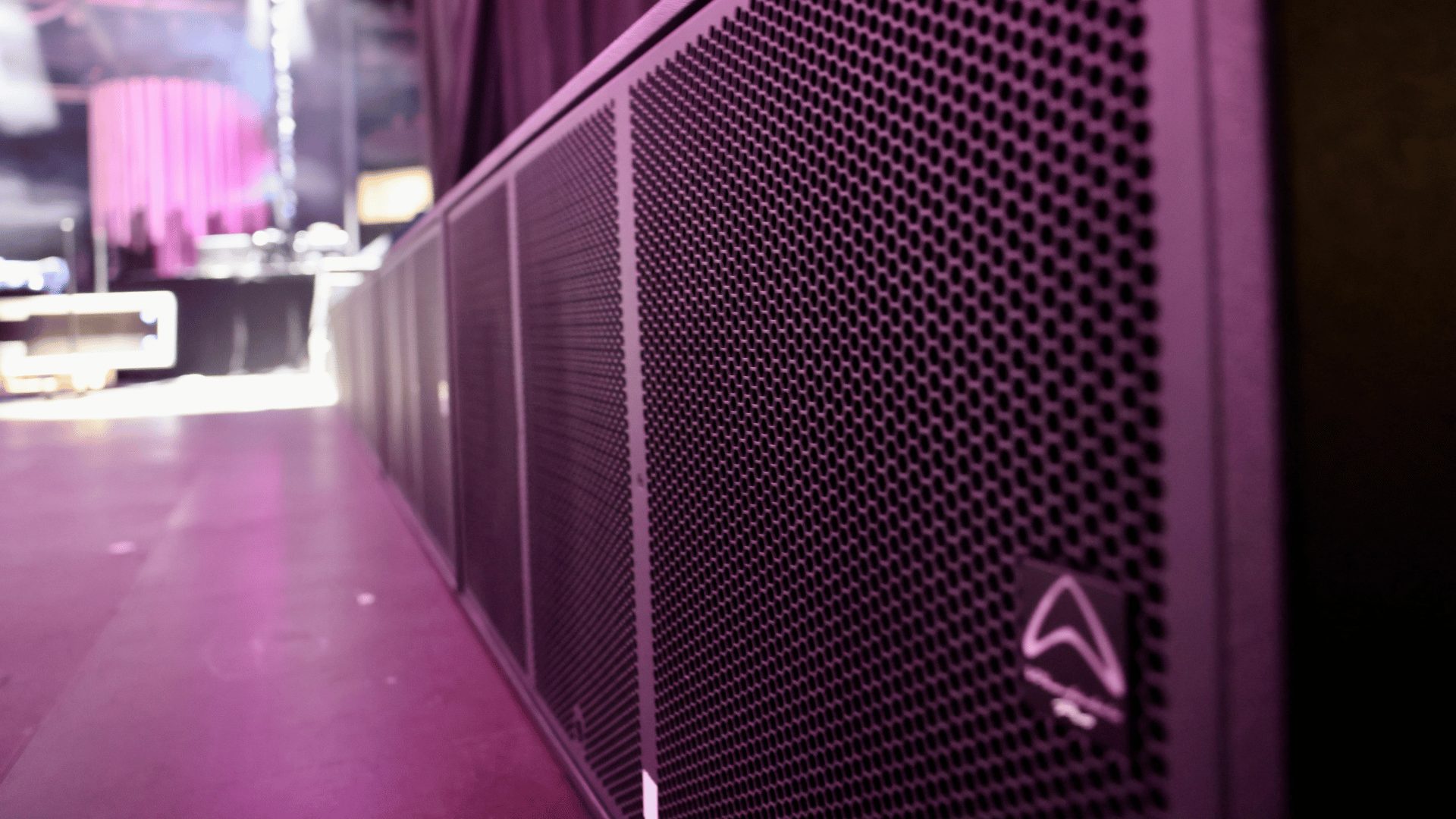
Key Takeaway
Flown subwoofers aren't always the best solution. Their placement should be determined by the venue, available rigging height and the acoustic result you're trying to achieve.
2. Setting Every Cabinet to 0°
A line array only works as intended when each cabinet is aimed at a specific audience area. One of the most common mistakes is leaving every cabinet at a 0° inter-cabinet angle.
A 0° angle should only be considered where maximum throw is required, and typically only for the upper elements of the array. Lower cabinets are responsible for covering listeners closer to the stage and usually require progressively larger angles.
If every enclosure points in the same direction, the audience nearest the stage often receives poor high-frequency coverage while energy is projected beyond the audience instead of towards them.
A well-designed array follows the audience geometry rather than forcing every loudspeaker to behave identically. Correct inter-cabinet angles deliver smoother coverage, more consistent frequency response and a better listening experience throughout the venue.
The goal isn’t a straight array. The goal is even coverage.
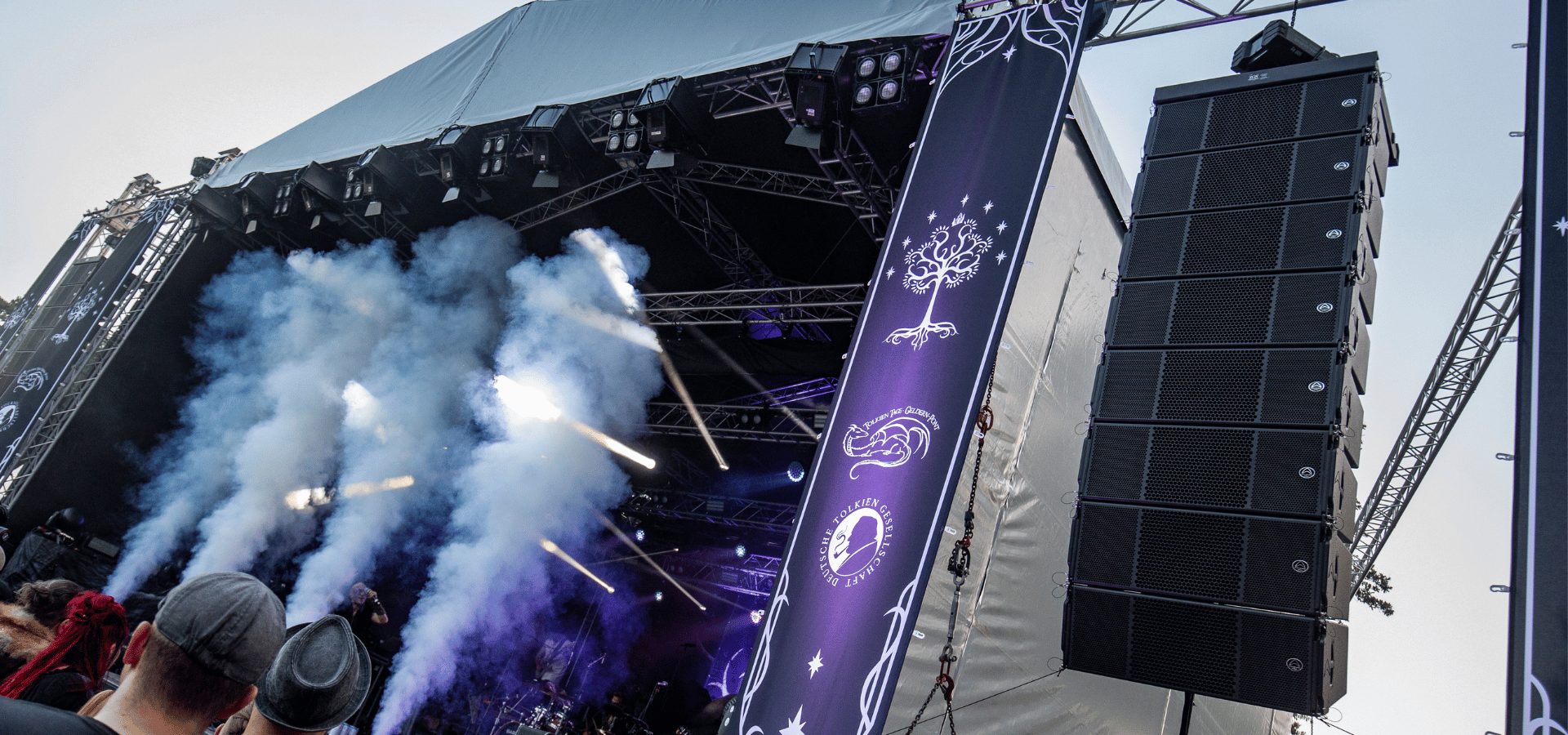
Key Takeaway
Every cabinet should be aimed at its intended audience area. Correct inter-cabinet angles create smoother, more consistent coverage than a perfectly straight array.
3. Ignoring the Factory Presets
Our line array systems are engineered as complete electro-acoustic systems. The loudspeaker, amplifier and DSP presets are designed together.
Factory presets contain carefully developed crossover points, equalisation, limiting, phase alignment and protection settings. Replacing these with generic DSP settings or “starting from scratch” often results in poorer performance, reduced headroom and unnecessary stress on the loudspeakers.
Many engineers assume they can improve on the manufacturer’s processing before hearing the system correctly configured. In reality, the factory preset provides the reference point from which any venue-specific adjustments should be made.
Think of it as tuning a race car. The factory setup has already done the difficult engineering. Fine adjustments are expected, but removing the baseline setup rarely improves performance.
Always begin with the manufacturer’s recommended preset.
If you’re weighing up the benefits of active and passive line array systems, our guide to Active vs Passive Audio Systems explores the strengths of each approach in more detail. It also covers important considerations such as system scalability, future expansion and the role of DSP controllers like the XC-44F and XC-44N.

Key Takeaway
Factory DSP presets provide the best starting point because they're designed specifically for the loudspeaker system. Make venue-specific adjustments from that baseline rather than replacing it entirely.
4. Forgetting to Check Polarity
A single loudspeaker wired with incorrect polarity can have a surprisingly large effect on the overall system.
When adjacent loudspeakers are out of polarity, sound waves no longer combine correctly. Instead of reinforcing one another, they begin cancelling. The result can be inconsistent coverage, reduced output, poor imaging and unexpected frequency response changes.
This is equally important for subwoofers. Incorrect polarity between mains and subs can dramatically reduce low-frequency performance, even though every cabinet appears to be working normally.
Before investigating DSP settings or blaming the room acoustics, always confirm cable wiring, connector integrity and loudspeaker polarity.
It’s one of the quickest system checks you can perform, yet it continues to solve countless problems on real-world deployments.
Sometimes the biggest improvement comes from finding one cable wired incorrectly.
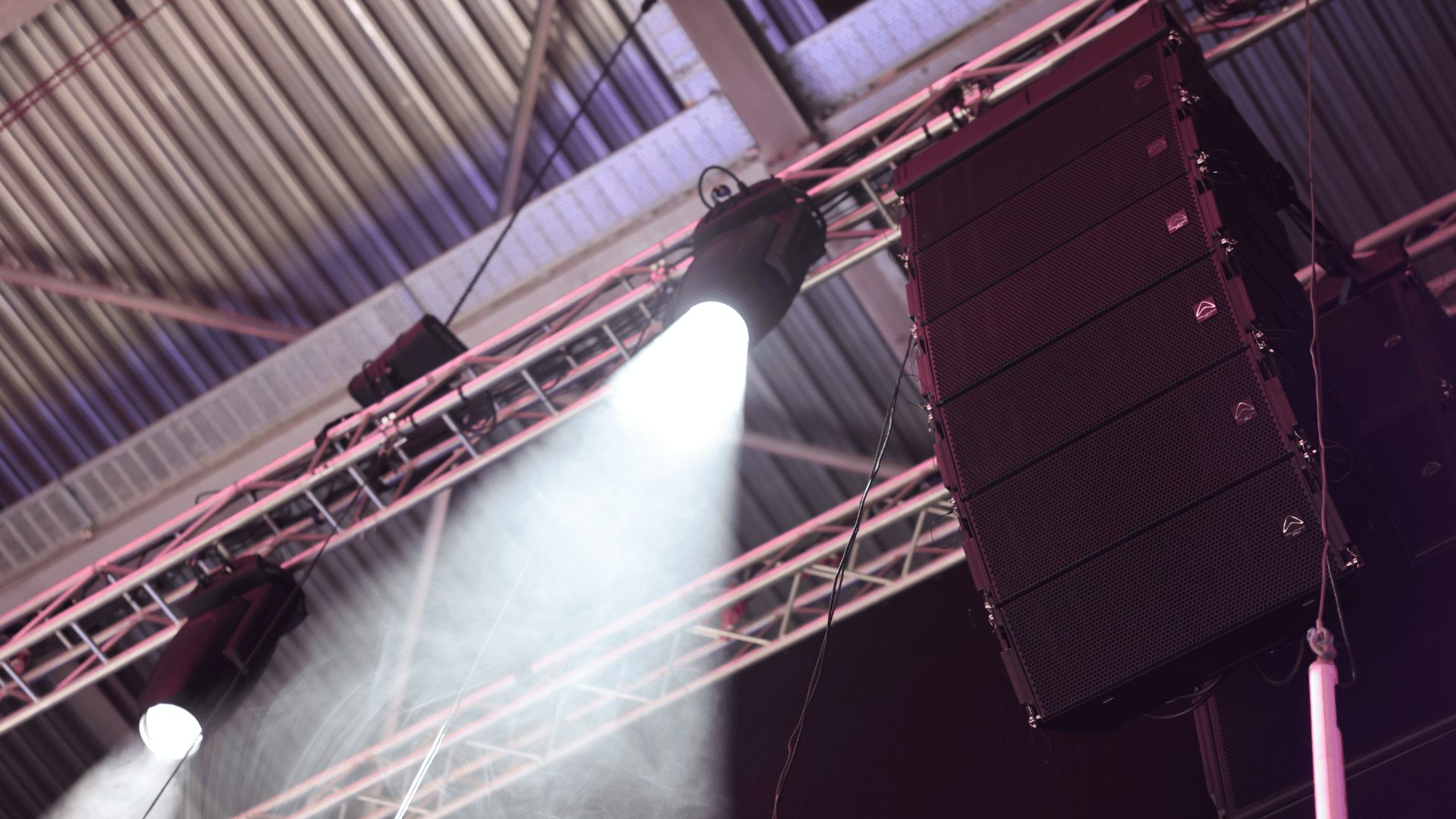
Key Takeaway
Incorrect polarity can dramatically reduce system performance, even when every loudspeaker appears to be working. Always verify polarity before making more complex adjustments.
5. Believing a Small Array Behaves Like a Large One
A four-element array is not simply a smaller version of a twelve-element array.
In compact arrays, true line array behaviour mainly exists in the high-frequency region controlled by the waveguide. At mid and low frequencies, the system behaves much more like a conventional point source.
This is why understanding coverage is so important. In the near field, where line source behaviour dominates, sound level reduces by approximately 3 dB each time the distance doubles. Further away, once the system transitions into the far field, propagation becomes spherical and level reduces by approximately 6 dB per doubling of distance.
Expecting a short array to deliver the same long-distance control as a much larger system inevitably leads to disappointment.
The most successful deployments begin with realistic expectations, accurate prediction software, correct array angles and careful listening during commissioning.
Systems such as the WLA-1 and WLA-1A demonstrate how scalable line array technology can be, with successful installations ranging from hotels and museums through to arenas and festivals. The key is selecting the right system configuration for the application rather than assuming every array behaves the same.
Technology matters—but correct positioning, proper array geometry and critical listening remain the keys to exceptional results.
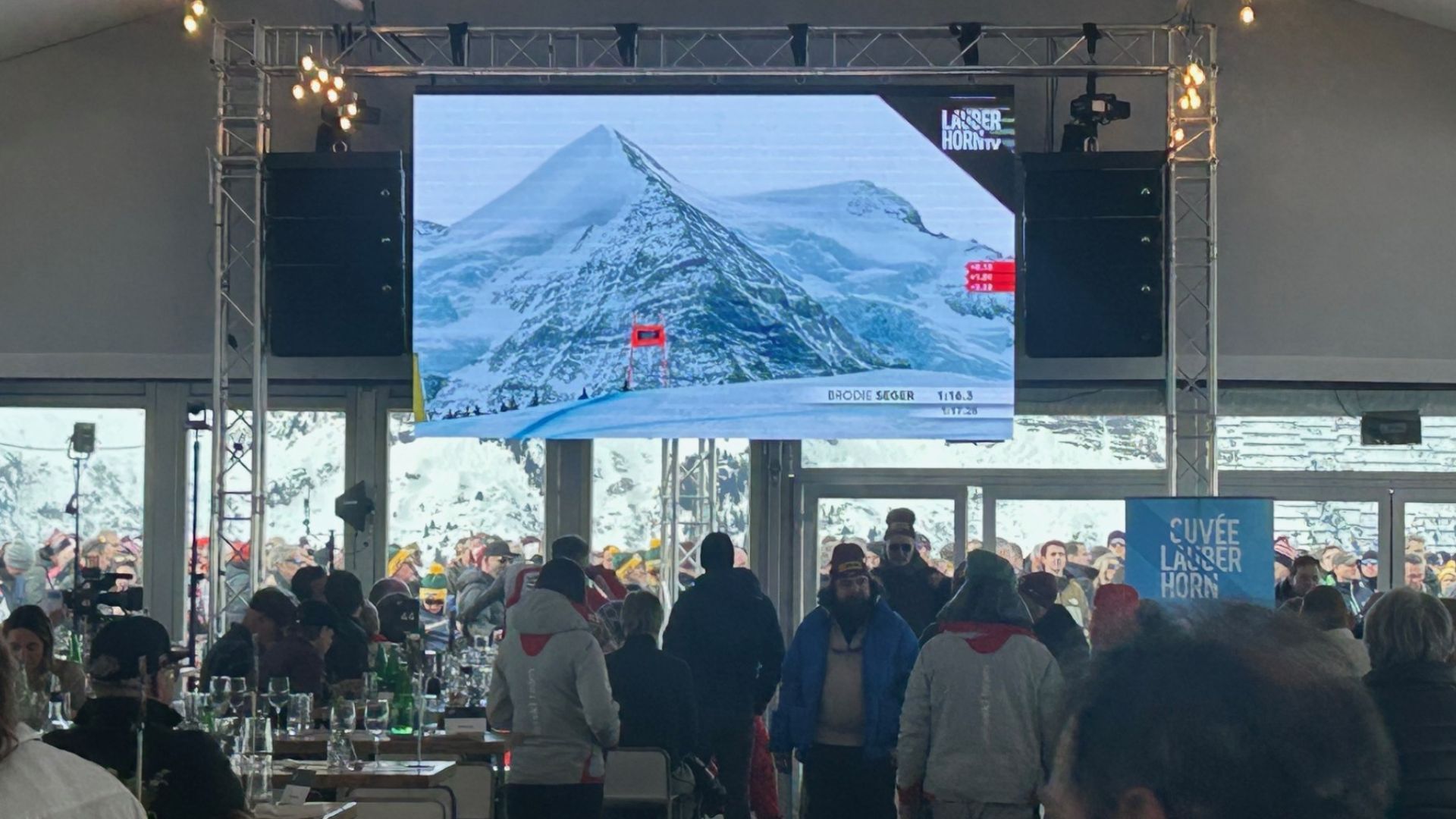
Key Takeaway
Short line arrays don't provide the same control or throw as larger systems. Matching the array size to the venue is essential for achieving consistent coverage.
Final Summary
The best-performing line array systems aren’t necessarily the biggest or the most complex—they’re the ones that are designed around the venue and deployed correctly. Paying attention to array geometry, subwoofer placement, DSP configuration, polarity and realistic system expectations can make a dramatic difference to coverage and overall sound quality.
By avoiding these common mistakes, you’ll achieve more consistent results, improve the listening experience for every audience member and get the very best performance from your line array system.
Whether you’re deploying a compact system or a large-format touring rig like the XLA System, the same principles apply. Careful system design, accurate prediction, correct deployment and thorough commissioning will always deliver better results than relying on equipment alone.You can also explore several real-world XLA System case studies to see how the system has been deployed in concert venues, arenas and large-scale live events.


Frequently Asked Questions
Should line array subwoofers always be flown?
No. Ground-stacked subwoofers are often the better choice, particularly in venues with limited trim height or where low-frequency coverage can be achieved more effectively from the floor.
Why shouldn't every line array cabinet be set to 0°?
A straight array projects sound further but doesn’t provide even audience coverage. Varying the inter-cabinet angles allows each enclosure to cover a different section of the audience more consistently.
Are factory DSP presets enough on their own?
Factory presets are designed to provide the optimum baseline for the loudspeaker system. They should normally be used first, with any EQ or level adjustments made afterwards to suit the venue.
How can incorrect polarity affect a line array?
If one or more loudspeakers are out of polarity, sound waves can cancel each other out. This often results in reduced output, inconsistent coverage and weaker low-frequency performance.
Does adding more cabinets always improve a line array?
Not necessarily. More cabinets increase array length and control, but the system still needs to be appropriate for the venue. Oversizing or undersizing an array can both reduce overall performance.
Why is prediction software important for line arrays?
Prediction software helps determine the correct array size, aiming angles and coverage before installation. It reduces guesswork and allows systems to be optimised for the venue before they’re even flown.