
Active vs Passive Audio Systems – Which is Better?
Active vs Passive Audio Systems – Which is Better?
Table of Contents
Choosing between an active and passive system.
Choosing between an active or passive audio system is one of the biggest decisions you’ll make when designing or upgrading a professional sound system. Both approaches have clear advantages, but the right choice depends on how the system will be used, installed and maintained.
In this guide, we’ll explain the key differences between active and passive loudspeakers, compare their strengths and limitations, and look at where each solution performs best. We’ll also explore how our own range of line array solutions to fit different applications, from live venues and touring systems to houses of worship, clubs and permanent installations.
What is a passive line array system?
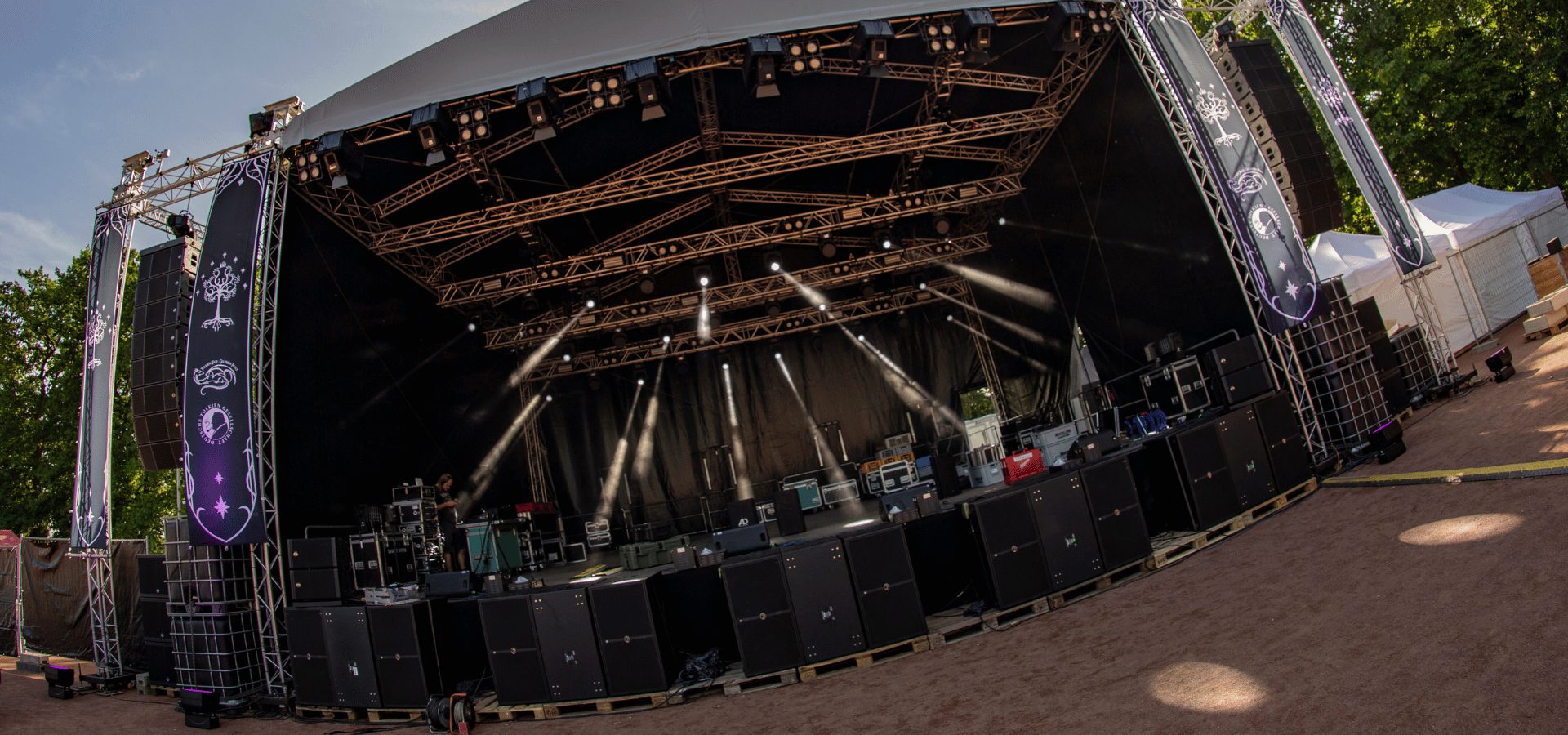
A passive line array system is a collection of loudspeaker cabinets that rely on external power amplifiers to drive the individual drivers inside each enclosure. Unlike active loudspeakers, passive systems do not contain built-in amplification or onboard DSP, allowing system designers to choose the amplification, processing and other hardware that best suits the application.
This approach is particularly popular in larger installations, touring productions and rental applications where flexibility and scalability are important. Amplifiers and DSP can be housed together in equipment racks, making system maintenance easier and allowing upgrades to be carried out without replacing the loudspeakers themselves. It also often keeps the loudspeaker cabinets lighter than equivalent active models, which can be an advantage when flying large arrays.
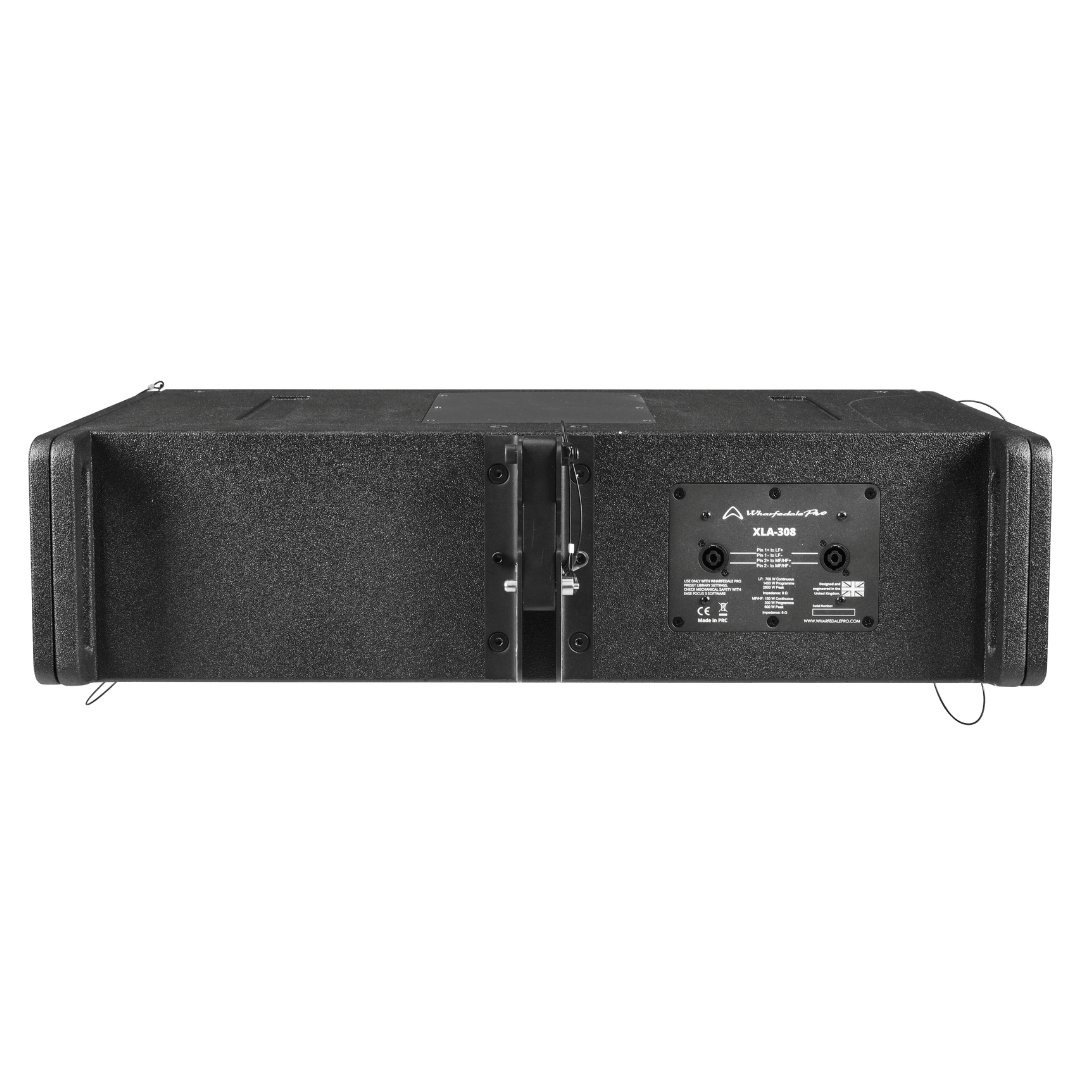
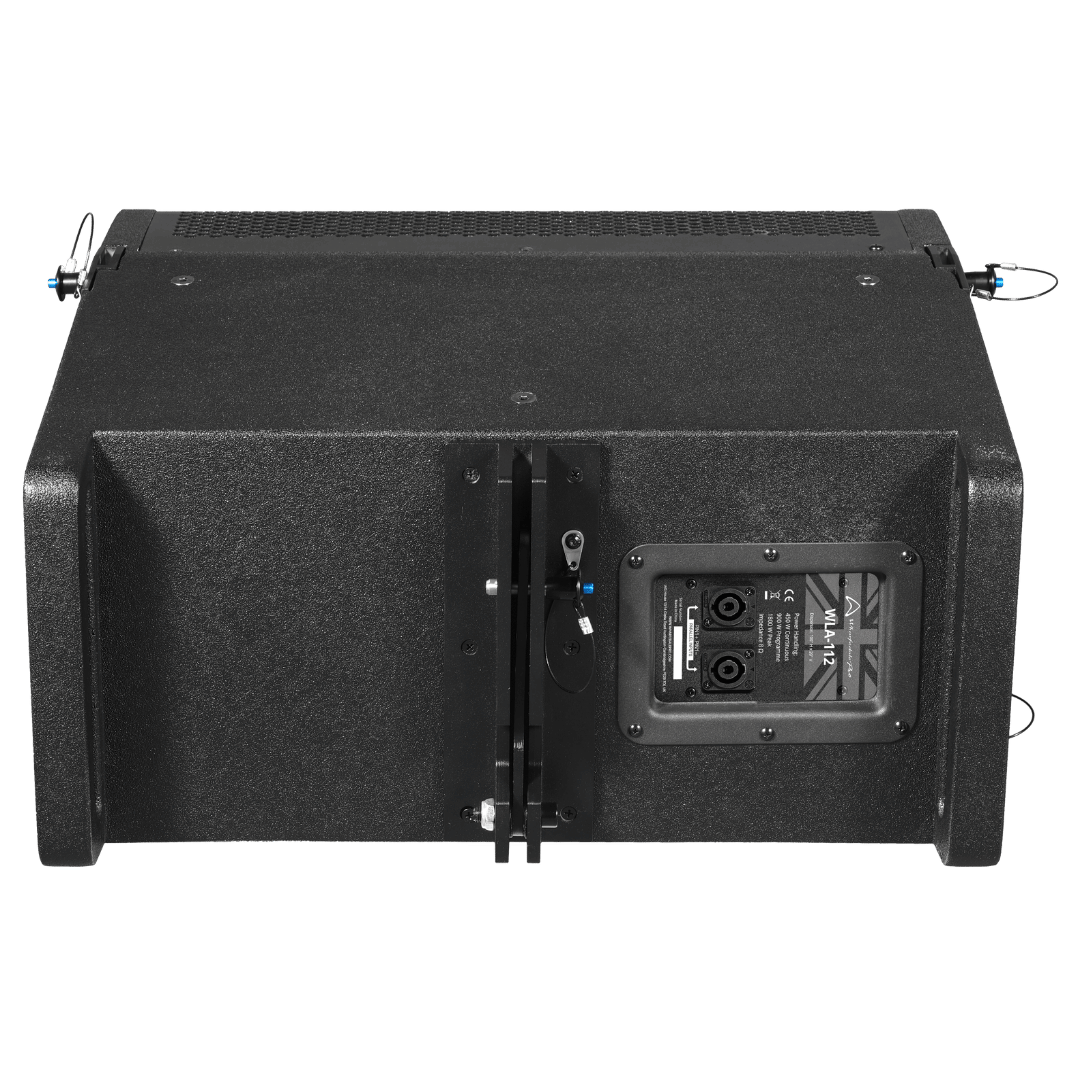
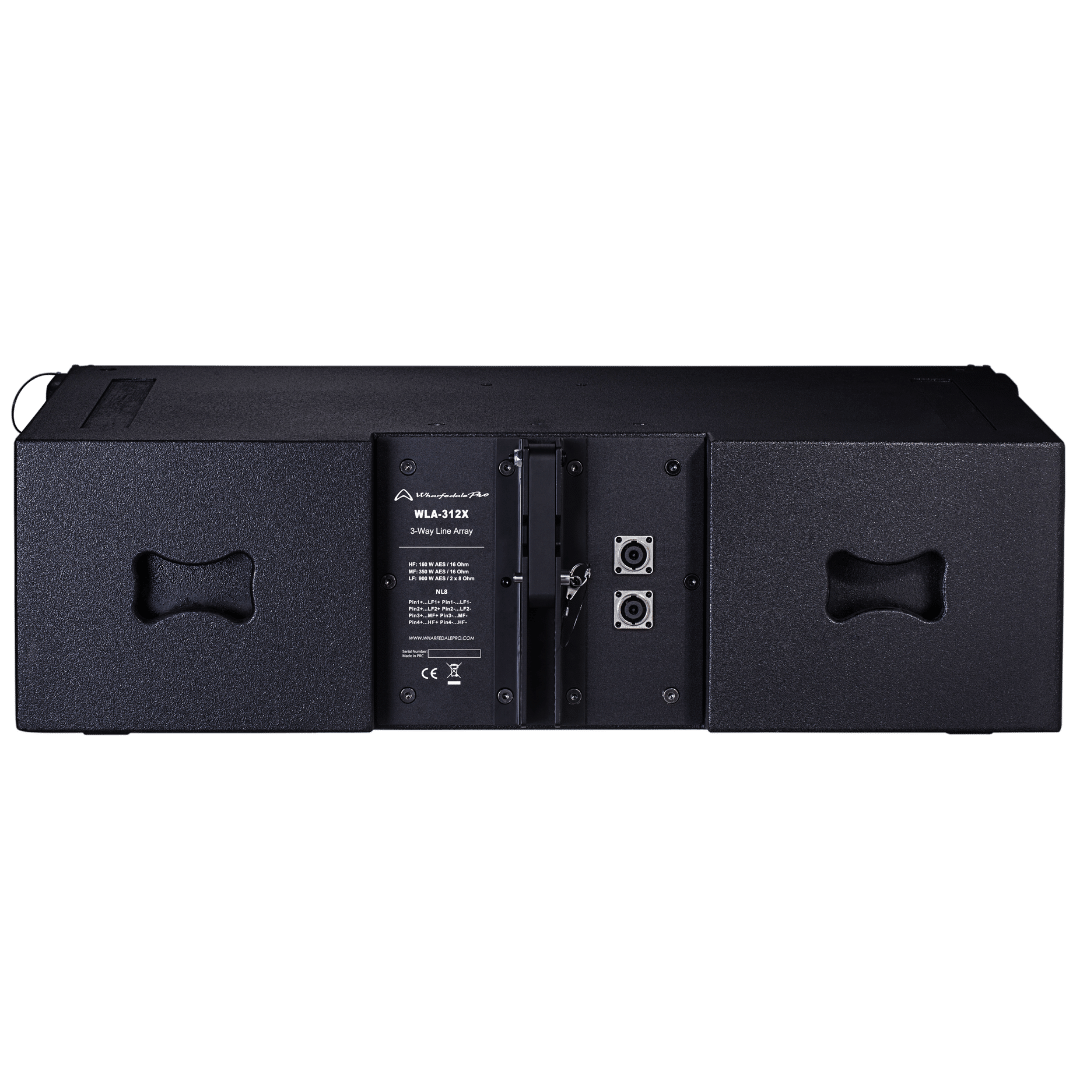
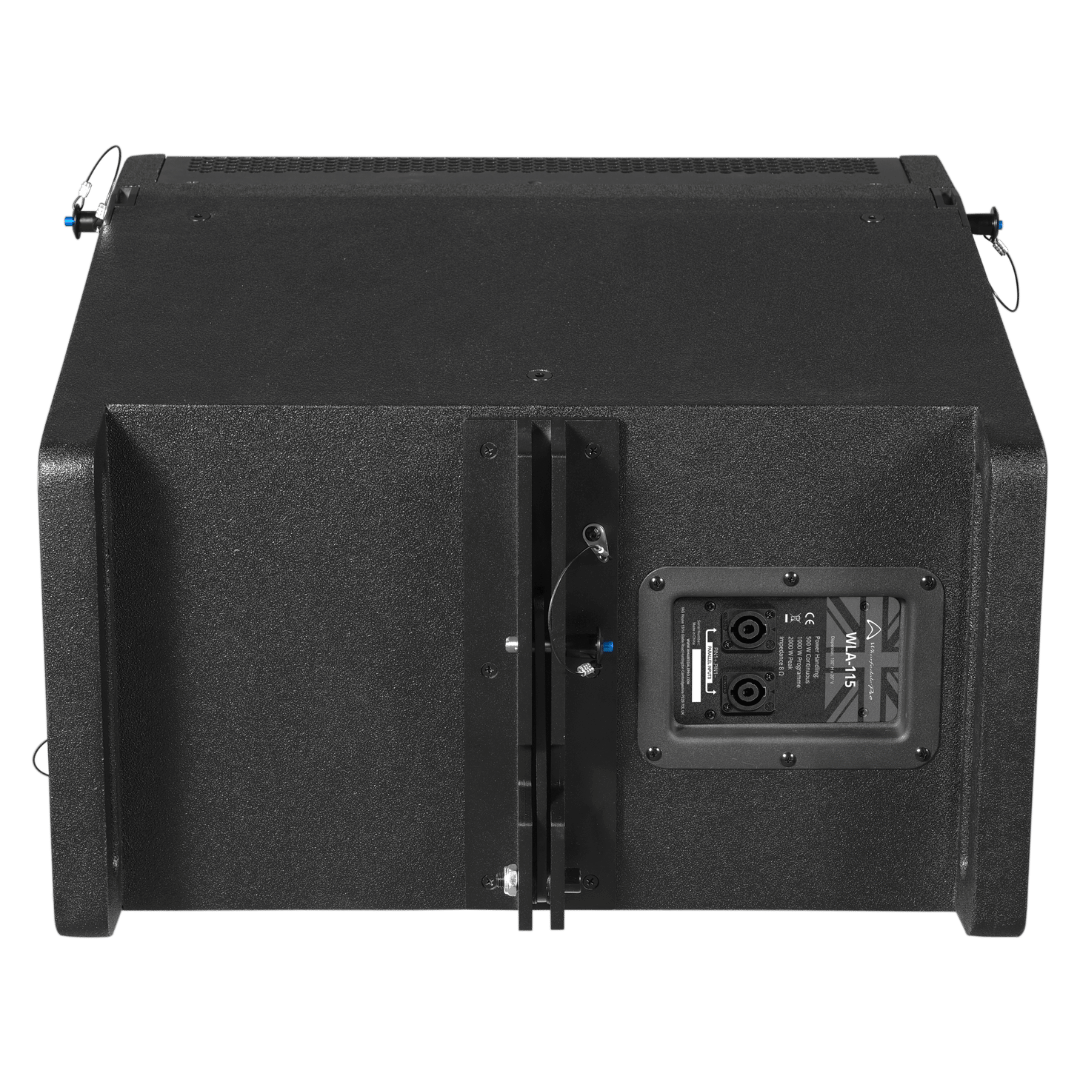
Wharfedale Pro offers several passive line array solutions designed for different applications. The WLA-112 is a compact coaxial hybrid curvature line array element that delivers excellent coverage and high output while remaining quick to rig and transport. For outdoor installations and challenging environments, the WLA-28XF combines high-performance line array technology with an IPX6 weather-resistant enclosure, making it well suited to stadiums, theme parks and other exposed venues, such as the Liuzhou Jiangzhong Music Fountain in China, the world’s largest floating fountain. For larger-scale sound reinforcement, the XLA-308 is a powerful three-way bi-amp line array element designed to deliver exceptional vocal clarity, controlled dispersion and consistent coverage across long throw distances, such as this 5,200 capacity venue in Switzerland.
Because passive systems separate the loudspeakers from the amplification, they are often the preferred choice for permanent installations where equipment racks are centrally located, as well as for professional touring companies that require complete control over amplifier selection, DSP configuration and system expansion.
Key Takeaway
Passive systems can offer greater flexibility for large installations, but do require external amplifiers.
What is an active line array system?
An active line array system combines the loudspeaker, power amplification and digital signal processing into a single cabinet enclosure. Each cabinet contains its own matched amplifier channels and DSP, allowing the loudspeaker to be optimised for maximum performance, protection and reliability.
One of the biggest advantages of an active system is simplicity. With the amplification already built into each cabinet, installation is often faster and requires less external equipment. Signal processing, crossover settings, limiter protection and amplifier tuning are all configured specifically for the loudspeaker, helping to deliver consistent performance while reducing system setup time. This makes active systems particularly attractive for touring companies, production rental businesses and venues looking for straightforward system deployment.
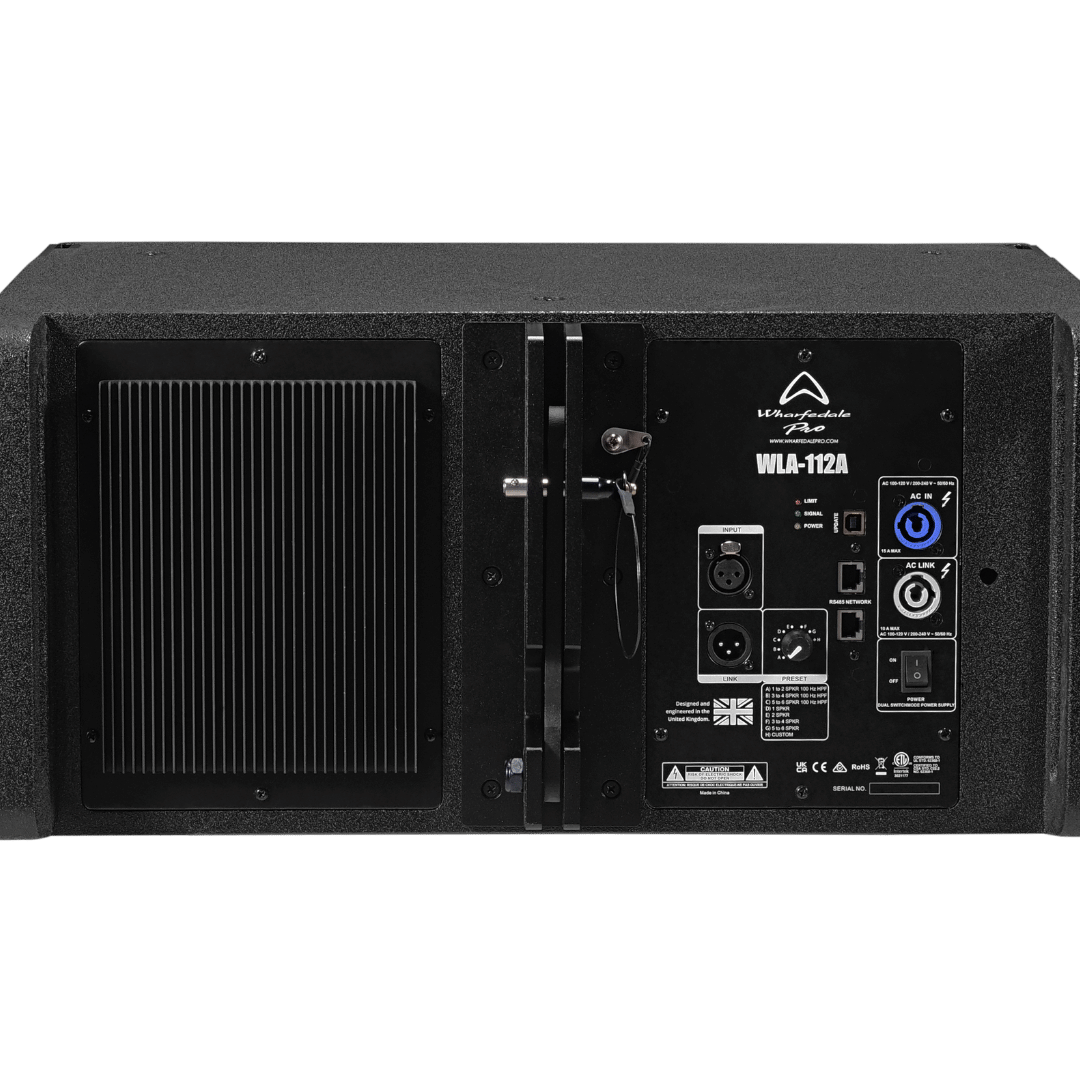
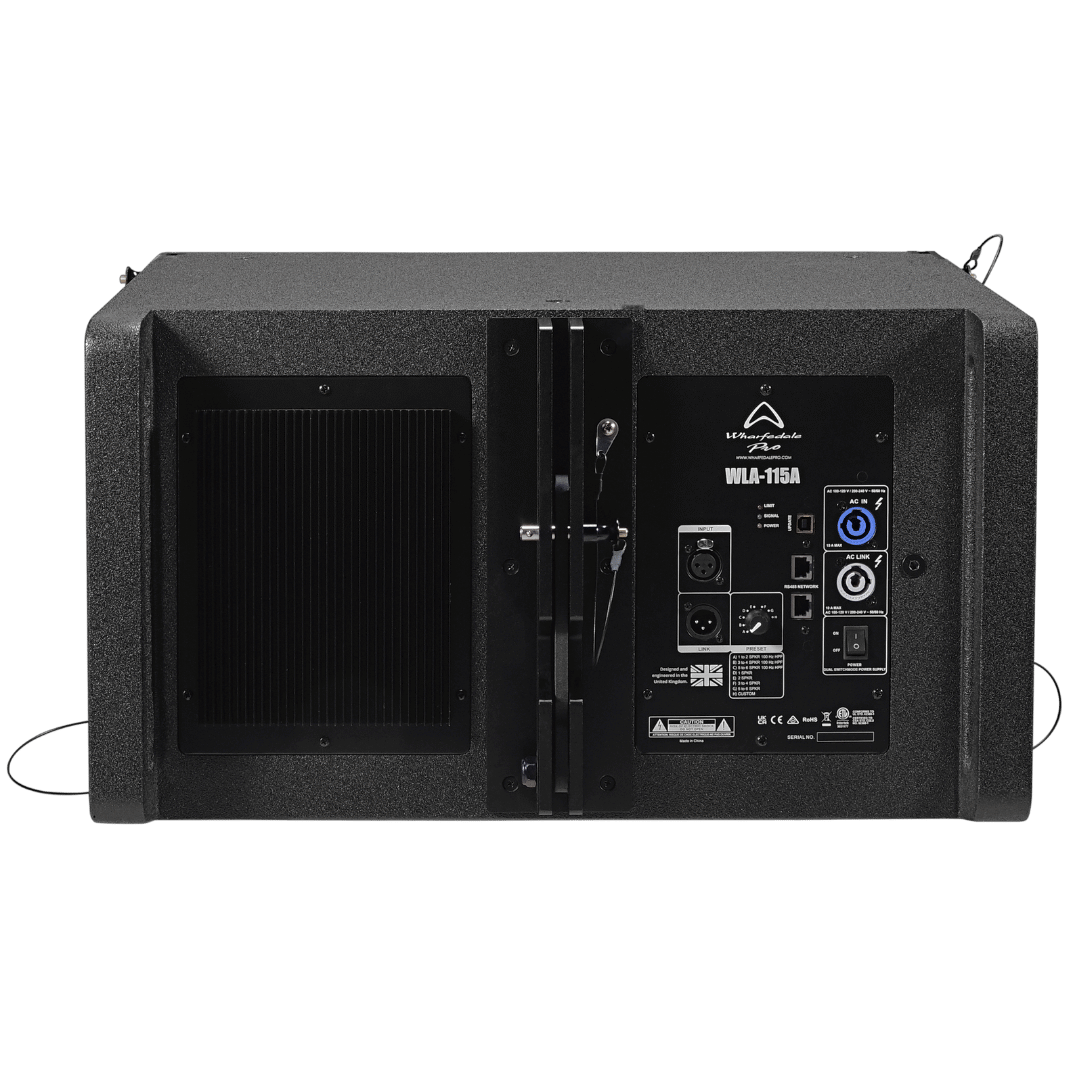
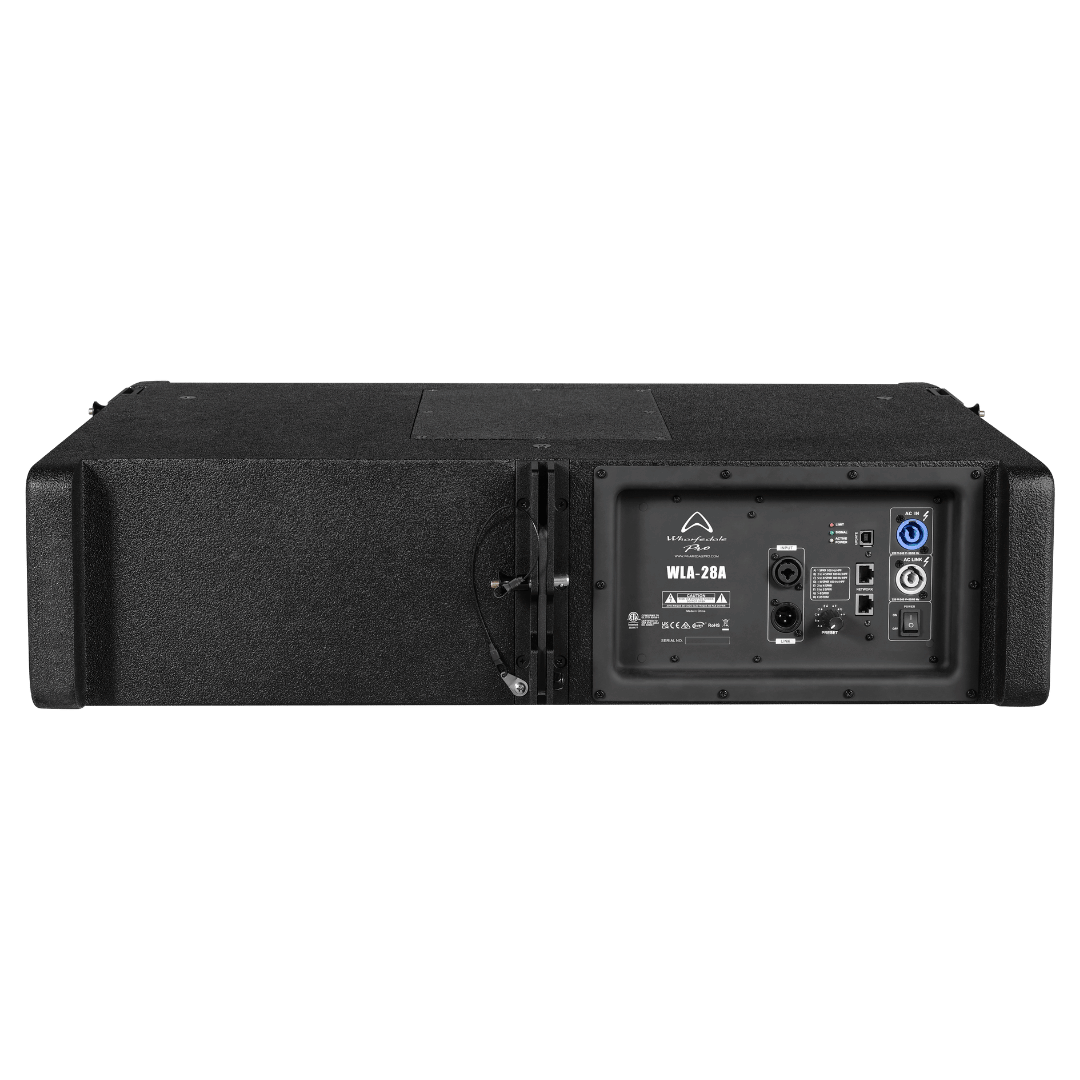
Within the Wharfedale Pro range, the WLA-112A brings all of the benefits of the passive WLA-112 into a fully powered solution, combining high-performance amplification and onboard DSP with the same compact coaxial hybrid curvature design. Low-frequency reinforcement can be added using the WLA-118SUBA, an active flyable subwoofer engineered to integrate seamlessly into flown line array systems while maintaining a clean rigging profile. For applications requiring substantial low-frequency output on the ground, the WLA-218BA provides powerful dual 18-inch performance together with integrated DSP, factory presets and built-in amplification, simplifying deployment while maintaining precise system control.
Active line array systems are often chosen when fast setup, reduced rack space and simplified system integration are priorities. By combining amplification and processing within each enclosure, they provide a highly efficient solution that can reduce installation complexity while delivering predictable, repeatable performance across a wide range of professional audio applications.

Key Takeaway
Active systems contain built-in amplifiers and DSP and are faster to deploy and easier to configure.
Is one system better than the other?
There isn’t a single answer because neither system is inherently better than the other. The right choice depends entirely on the application, the installation environment and the long-term requirements of the venue or sound system.
In most projects, this decision is made at the very beginning of the system design process. Before choosing loudspeakers, amplifiers or even cable routes, it’s important to understand how the system will be used. Will it remain permanently installed for years with minimal maintenance, or will it be transported, rigged and dismantled several times each week? Does the venue already have amplifier racks and equipment rooms, or is a self-contained solution preferred? These questions help determine whether an active or passive system is the most suitable approach.
For permanent installations, passive systems are often the preferred option. Amplifiers and DSP can be installed in a dedicated equipment rack, making servicing straightforward while keeping the loudspeakers themselves lighter and easier to install. If an amplifier ever requires replacement or future upgrades are planned, this can usually be done without removing the loudspeakers from their installed position. This approach is commonly found in theatres, arenas, conference centres, houses of worship and large commercial venues where reliability, long-term flexibility and centralised system management are important.
Active systems are frequently chosen where speed, simplicity and consistency are higher priorities. Because each loudspeaker contains its own matched amplifier and DSP, there is less external equipment to configure, fewer compatibility decisions to make and less time spent commissioning the system. Touring companies, rental providers, production houses and temporary event organisers often favour active systems because they can be deployed quickly while delivering predictable performance every time they are used.
Neither active nor passive audio systems are universally better. The best choice depends on how the system will be installed, operated and maintained over its lifetime. Understanding these requirements at the beginning of a project makes it much easier to select the right solution.
| Application | Usually Best Choice | Why? |
|---|---|---|
Touring/Outdoor Festivals | Passive | Greater control, flexibility, and easy amplifier management across very large systems |
Large Sports Hall | Passive | Flexible amplification and long-term scalability |
House of Worship | Passive | Centralised equipment racks, easy maintenance |
Theatre | Passive | Flexible amplification and long-term scalability |
Outdoor Stadium | Passive | Flexible amplification and long-term scalability |
Club/Music Venue | Active or Passive | Depends on available space and installation requirements |
Retail promotions | Active | Simple installation with minimal equipment |
Bar/Restaurant | Passive | Flexible amplification and long-term scalability |
Key Takeaway
Neither active nor passive audio systems are inherently better. The right choice depends on the application's technical requirements, installation method, maintenance strategy and long-term goals.
How to choose which system you need.
Choosing between an active and passive audio system starts with understanding the application rather than comparing specifications. Before selecting loudspeakers, it’s important to consider how the system will be used, where it will be installed and who will be responsible for operating and maintaining it over the years ahead.
Budget will often influence the decision, although it’s rarely as straightforward as one system simply costing less than the other. A passive system requires external amplifiers, DSP, amplifier racks and additional cabling, while an active system integrates much of this hardware into the loudspeaker itself. As a result, the overall project cost depends on factors such as the size of the installation, the existing infrastructure, installation time and long-term maintenance. In many cases, the most cost-effective solution is the one that best fits the application rather than the one with the lowest initial purchase price.
The installation environment is equally important. Outdoor events and venues may require weather-resistant loudspeakers with suitable ingress protection, while large-scale performance venues often benefit from systems that can be expanded as audience numbers grow. Retail environments, hospitality venues and conference spaces may prioritise discreet installation and straightforward day-to-day operation, whereas touring productions often place greater value on flexibility, serviceability and system control.
Ultimately, choosing between an active and passive audio system isn’t about deciding which technology is superior. It’s about selecting the solution that best matches the technical requirements, operational workflow and long-term goals of the project. When these factors are considered during the planning stage, the result is a sound system that’s easier to install, simpler to maintain and better suited to the people who rely on it every day.
Questions to Ask Yourself Before Choosing an Audio System:
- Is the system permanent or temporary?
- Will it be installed indoors or outdoors?
- Who will maintain the system?
- Is future expansion likely?
- Is there room for amplifier racks?
- Will the system be moved regularly?
- What is the available budget?
Key Takeaway
Start by understanding the application, installation environment and operational requirements. The best audio system is the one that fits the project, not necessarily the one with the lowest purchase price or the most features.
System Scalability, DSP and Future Expansion
One of the biggest advantages of a passive audio system is the flexibility it offers as system requirements change over time. Additional loudspeakers and subwoofers can often be integrated by expanding the amplifier infrastructure rather than replacing the existing system. This makes passive systems particularly well suited to venues that expect to grow, renovate or increase audience capacity in the future. By separating the loudspeakers from the amplification and processing, system designers have greater freedom to upgrade individual components without redesigning the entire installation.
Digital signal processing (DSP) also plays an important role in achieving the best possible performance from a passive system. Modern DSP platforms allow engineers to configure crossover frequencies, equalisation, delay, limiter settings and loudspeaker protection with exceptional precision. Wharfedale Pro supports many of its passive loudspeaker systems with carefully developed loudspeaker presets, helping installers achieve consistent performance while ensuring every loudspeaker operates within its intended parameters. The XC-44F and XC-44N DSP controllers provide four inputs and four outputs, offering flexible system management and compatibility with both DP-F and DP-N amplifier platforms for streamlined setup and control.
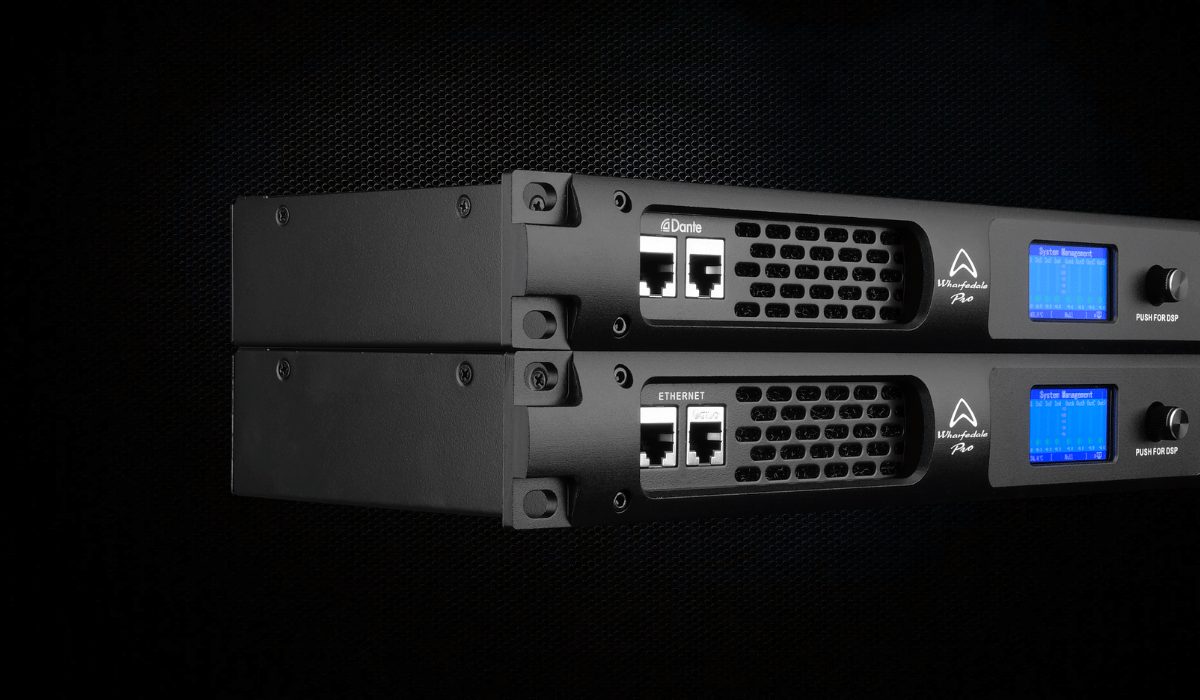
When combined with our power amplifiers such as the DP-N Series, DSP becomes the centre of a fully integrated sound system. Network-enabled amplifier platforms provide remote monitoring, system diagnostics and advanced processing, allowing engineers to manage multiple loudspeakers from a single location while maintaining consistent performance across the entire installation. This approach not only simplifies commissioning but also makes future expansion, maintenance and software updates significantly easier throughout the lifetime of the system.
Key Takeaway
Passive systems offer greater long-term flexibility because amplification and DSP can be expanded, upgraded and reconfigured independently of the loudspeakers. When combined with properly configured DSP, amplifier platforms and manufacturer presets, the system can be scaled and optimised over time without replacing the core loudspeaker infrastructure.
Final Summary
Choosing between an active and passive audio system ultimately comes down to how the system needs to function in the real world, not which technology appears more advanced on paper.
In practice, professionals start by defining the application, installation environment and long-term expectations for the system. From there, the decision is shaped by factors such as infrastructure availability, system scalability, maintenance strategy and operational workflow.
Active systems tend to simplify deployment by combining amplification and DSP within each loudspeaker, making them well suited to fast-paced environments where speed and consistency are priorities. Passive systems, on the other hand, separate amplification and processing from the loudspeakers, offering greater flexibility, easier system expansion and more centralised control over long-term system design.
When these factors are properly considered during the planning stage, the result is not just a better-sounding system, but one that is easier to manage, scale and maintain throughout its lifetime.
Frequently Asked Questions
Is an active audio system better than a passive system?
Neither system is inherently better. Active systems are often preferred for simple deployment and faster setup, while passive systems offer greater flexibility, scalability and long-term control. The right choice depends on the application and system requirements.
Do passive loudspeakers need a power amplifier?
Yes. Passive loudspeakers require an external power amplifier to drive the speakers. In many professional installations, amplifiers are housed in dedicated equipment racks alongside DSP for centralised system management.
Do active loudspeakers have built-in amplifiers?
Yes. Active loudspeakers include integrated power amplifiers and typically feature built-in DSP for crossover management, equalisation and loudspeaker protection, reducing the need for external processing equipment.
Which system is easier to expand?
Passive systems are generally easier to expand in larger installations. Additional amplifier channels, loudspeakers and processing can often be added without replacing the existing loudspeaker system, making them well suited to future growth.
Why is DSP important in a professional audio system?
DSP optimises loudspeaker performance by managing crossover frequencies, equalisation, delay and limiter settings. It also helps protect loudspeakers from damage while ensuring consistent sound quality across the entire system.
What are loudspeaker presets?
Loudspeaker presets are manufacturer-developed DSP settings which optimise performance for specific loudspeaker models. They simplify system setup while helping achieve consistent sound quality and reliable loudspeaker protection.
Can active and passive loudspeakers be used together?
Yes. Many professional audio systems combine active and passive loudspeakers where appropriate. With the correct amplification, DSP and system design, both technologies can work together as part of the same installation.
Which system is best for permanent installations?
Passive systems are often preferred for permanent installations because amplification and DSP can be located in central equipment racks, making future maintenance, upgrades and system expansion more straightforward.
Which system is best for touring?
For large-scale touring productions, passive systems are commonly chosen because they offer greater flexibility, amplifier redundancy and easier servicing. Smaller touring systems may benefit from the simplicity and fast deployment of active loudspeakers.
Does choosing the right system improve sound quality?
Sound quality depends far more on system design, loudspeaker selection, DSP configuration and installation than on whether the system is active or passive. When specified correctly, both technologies are capable of delivering exceptional performance.