Interview: Remo Orsoni
XLA Series – From Concept to Deployment
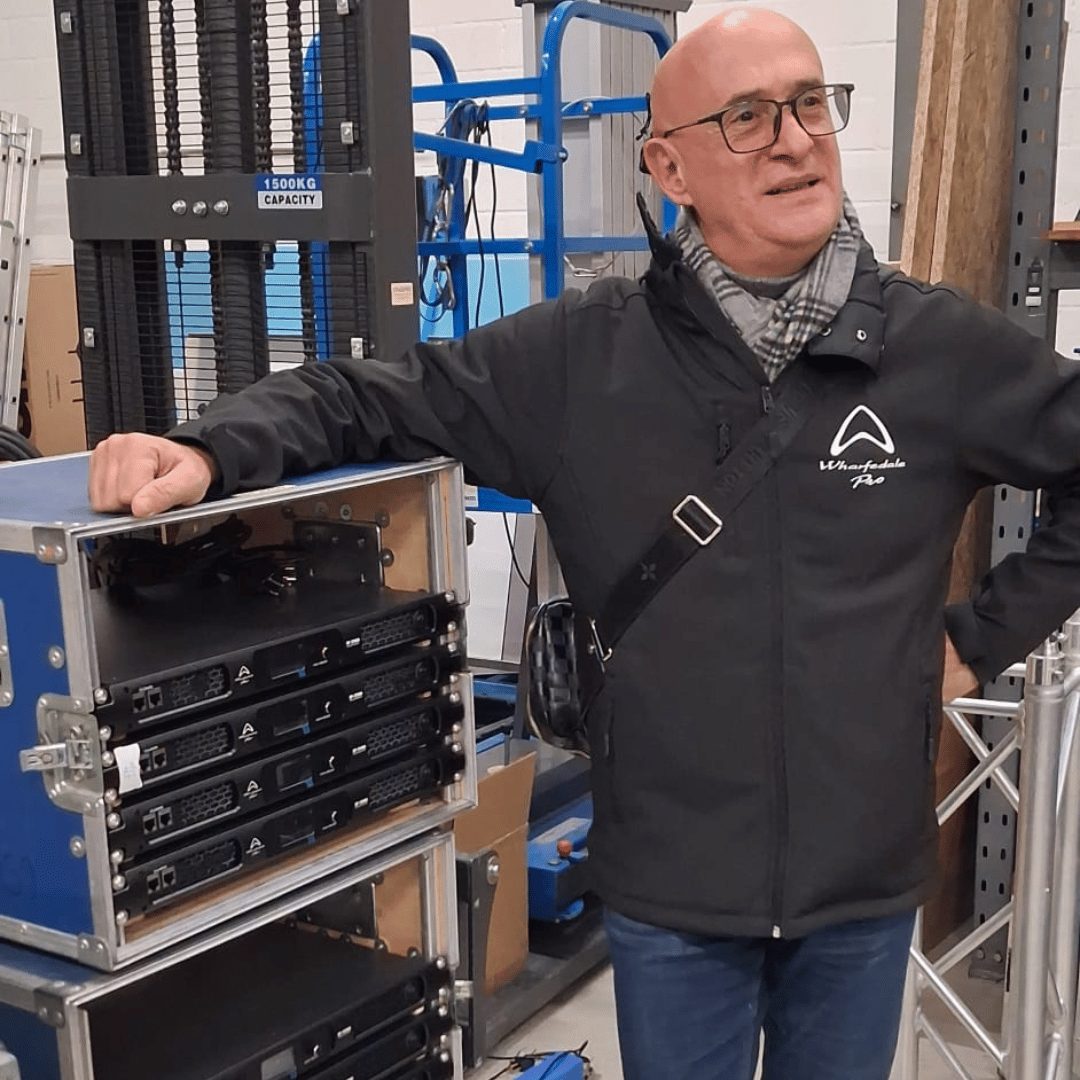
We caught up with Remo Orsoni, our R&D Director, to talk about his hands-on approach to the flagship XLA system. From early design through to its first live deployment, Remo followed the project every step of the way.
Q1. You led the development of the XLA system. What was the original concept behind it?
The idea behind XLA was to create a flagship line array that combines precision, scalability, and musicality. I wanted a system that could translate from simulation to reality with minimal compromise, delivering consistent coverage and tonal balance. It had to be adaptable for different venue types while remaining intuitive for engineers. Ultimately, the concept focused on ‘control’ and how best to manage dispersion, phase coherence, and system behaviour to deliver consistent coverage and tonal balance across the entire audience area.
Q2. What were some of the key technical decisions that shaped the system?
One of the most important decisions was the acoustic architecture, particularly the EVO-FLOW waveguide and the use of B&C coaxial mid/high-frequency compression drivers. For the overall tonal balance, especially vocal clarity and presence, the coaxial approach is critical. It allows the mid and high frequencies to behave as a single source, improving coherence and intelligibility. There are relatively few competing systems using mid compression drivers in this way, which gives XLA a clear advantage in projection and consistency.
Q3. You were directly involved in the first major deployment. Why was that important to you?
Designing a system is only part of the process. I always want to follow it through to real-world use. Being on-site in Switzerland allowed me to validate design decisions under real conditions, not just acoustically, but also in terms of rigging, system tuning, and workflow. It’s important to see how engineers interact with the system, how quickly it can be deployed, and how it performs under pressure during a live event.
Q4. What did you take away from working hands-on at the event?
The experience confirmed that consistency and usability are just as important as raw performance. You observe how the system behaves across the full coverage area, how predictable it is during tuning, and how it integrates with the rest of the production. It also gives insight into small mechanical, acoustic and software-related improvements that can make a meaningful difference in day-to-day use for engineers.
Q5. How does this experience influence future XLA development?
Being hands-on feeds directly into future development. It allows me to refine both the acoustic design and the user experience. You start to see where improvements can be made, whether in optimisation tools, rigging efficiency, or system voicing. It also reinforces our component choices, including working with partners like B&C and Beyma where they deliver clear advantages. Continuous feedback from real deployments is essential for evolving XLA further.
Thank you to Remo Orsoni for the interview! To read more about the XLA system, please visit https://wharfedalepro.com/xla-system. If you’d like to read the official story of the XLA Series being deployed in a major Swiss arena, please visit https://wharfedalepro.com/xla-series-makes-european-debut-at-major-swiss-arena-event/